Time Tested
Over 15 years of experience perfecting our craft and serving the community of Tiffin, OH and the surrounding North Central Ohio.
Get A Free Quote
Concrete Contractor
Tiffin Concrete Co. is a local concrete contractor that installs and repairs concrete for homes and businesses across Tiffin, OH and Seneca County. Our crews have poured driveways, patios, sidewalks, slabs, and foundations for over 15 years. We also build retaining walls, porches, pool decks, concrete fences, and fire pits, and we handle stamped concrete, staining, exposed aggregate, polished floors, garage epoxy coatings, resurfacing, and concrete sealing. The company is licensed, bonded, and insured, and every project starts with a free on-site estimate.
Every job starts with a written scope that sets the thickness, mix, reinforcement, and finish, so we know exactly what the job entails and you know exactly what you are paying for. On site, our crews shoot grade with a laser level, compact the aggregate base, check slump at the chute, set rebar on chairs, and finish exterior flatwork with a magnesium float. We cut control joints with an early-entry saw and cure every slab with an ASTM C309 curing compound. The mix we pour is air-entrained concrete rated around 4,000 psi, built for Ohio's freeze-thaw winters. We walk through each of these steps below.
We back every pour with credentials you can check and a record across residential and commercial work.
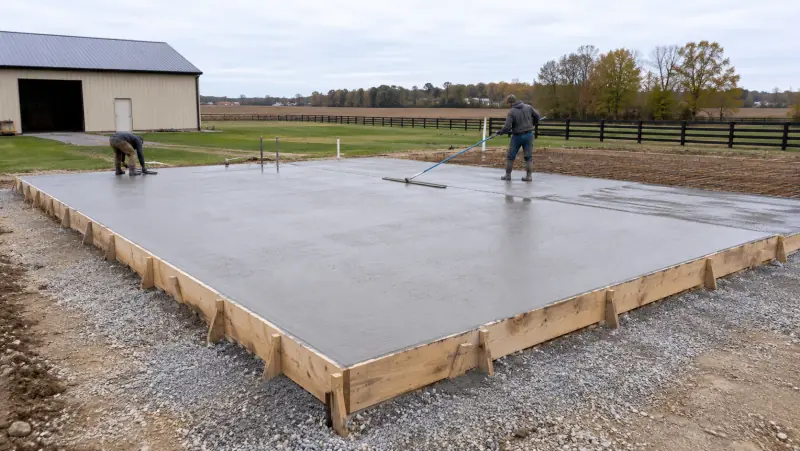
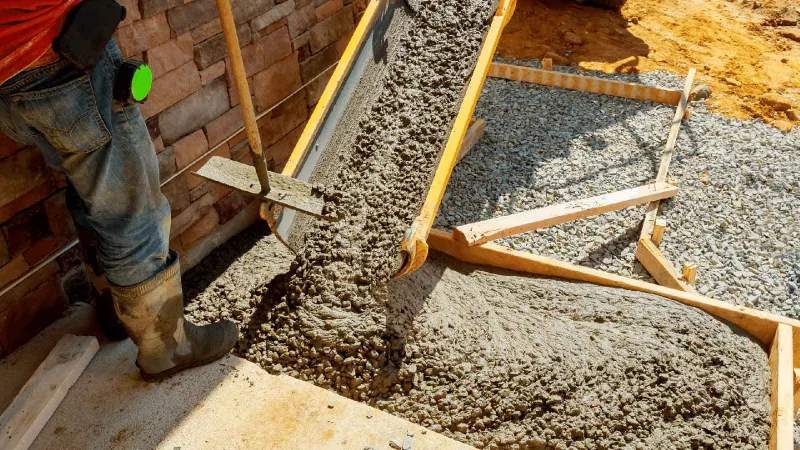
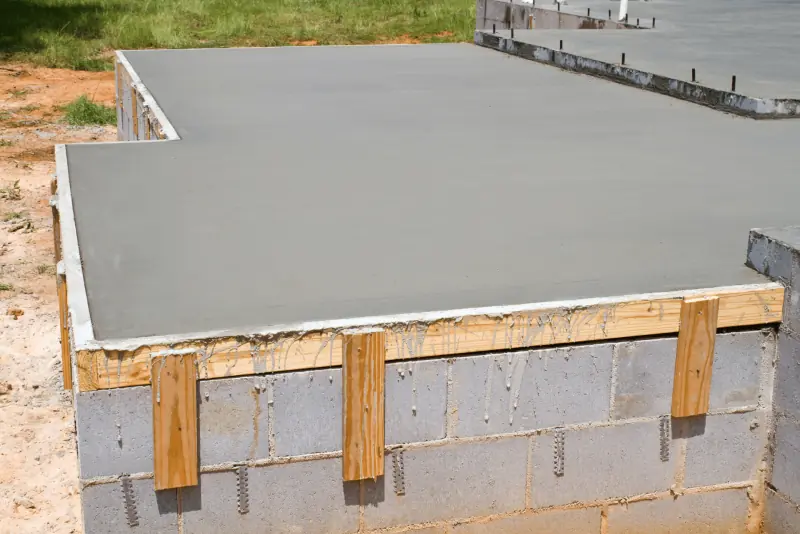
Good concrete starts underground. We measure the heights and slope of the site with a laser level so water drains off the finished slab instead of pooling on it. Then we excavate to grade and compact a 4 to 6-inch aggregate base with a plate compactor, packing the gravel tight so the ground cannot settle over the clay-heavy soils common around Seneca County. Once the base is solid, we set the forms - the wood or metal edges that hold wet concrete in its final shape - to line, grade, and drainage slope before the truck arrives.
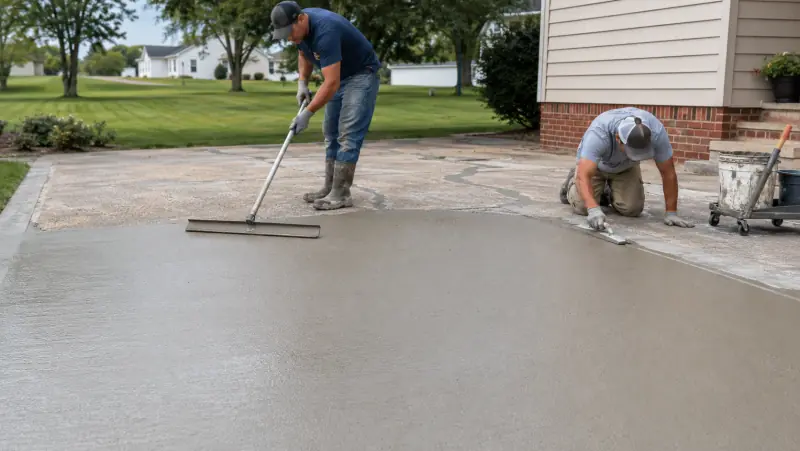
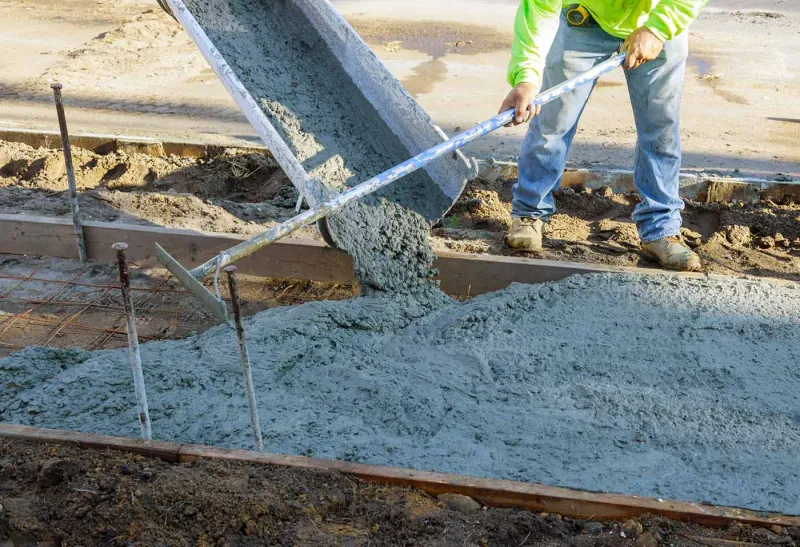
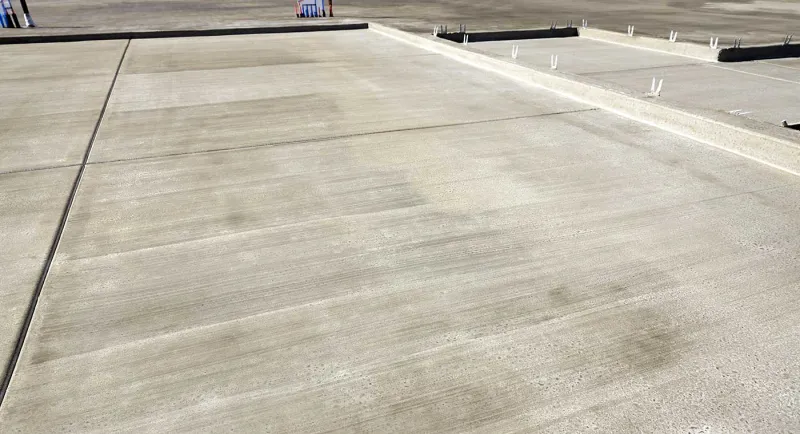
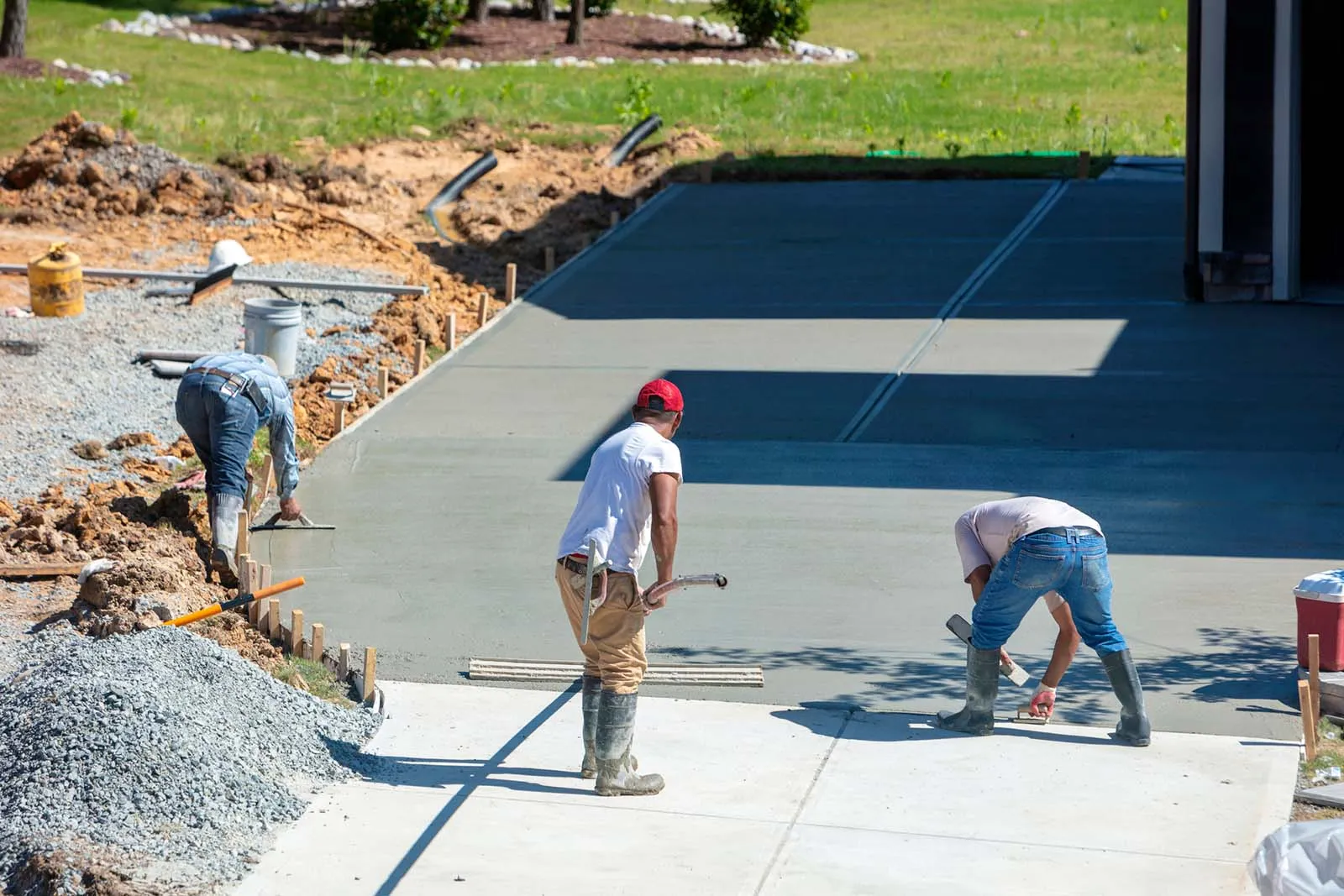
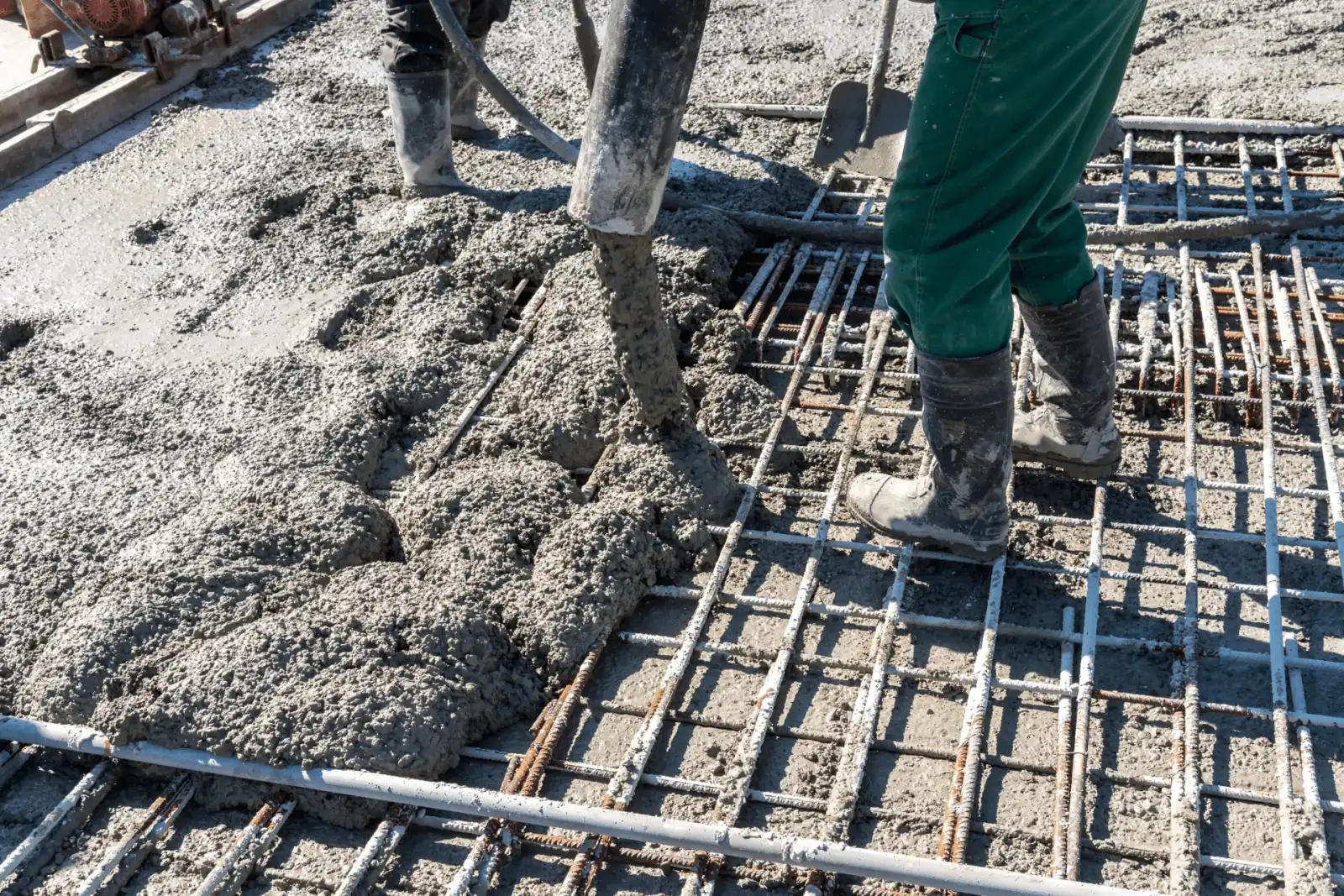
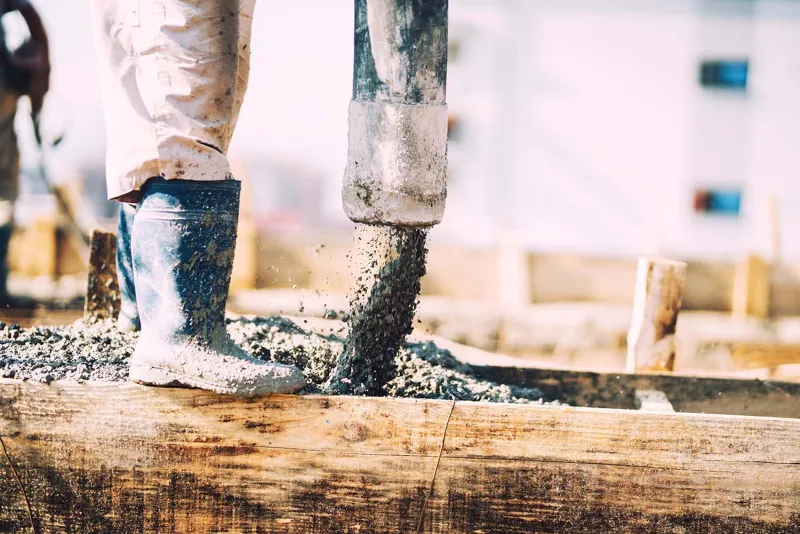
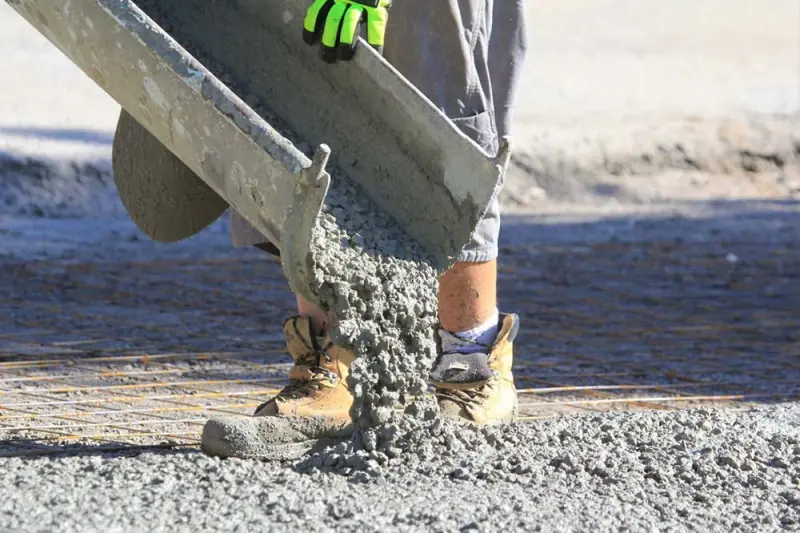
For the pour, we spec air-entrained concrete rated around 4,000 psi at 5 to 7 percent air content. Those microscopic air pockets give freezing water room to expand, so the surface resists the scaling and spalling an Ohio winter puts on unprotected concrete. When the truck arrives, we check slump at the chute, a simple test of how wet the load is. We send back concrete that arrives too watery to reach full strength. Our crews strike the surface level with a power screed, smooth it with a bull float, and finish exterior flatwork with a magnesium float, which leaves the slight open texture that outdoor concrete needs to release moisture. That finish goes on before the bleed water is worked back in, and timing it is what separates a hard, durable surface from one that dusts or crazes a year later.
Over 15 years of experience perfecting our craft and serving the community of Tiffin, OH and the surrounding North Central Ohio.
Our years of experience assure that we have the skills and tools required to execute your concrete project to perfection.
Get Tiffin Concrete Co. quality at a cost you can afford, with pricing options designed to fit every budget.
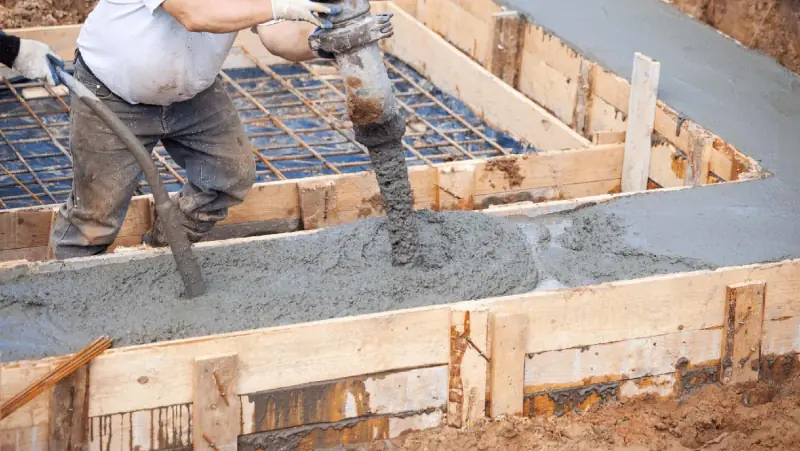
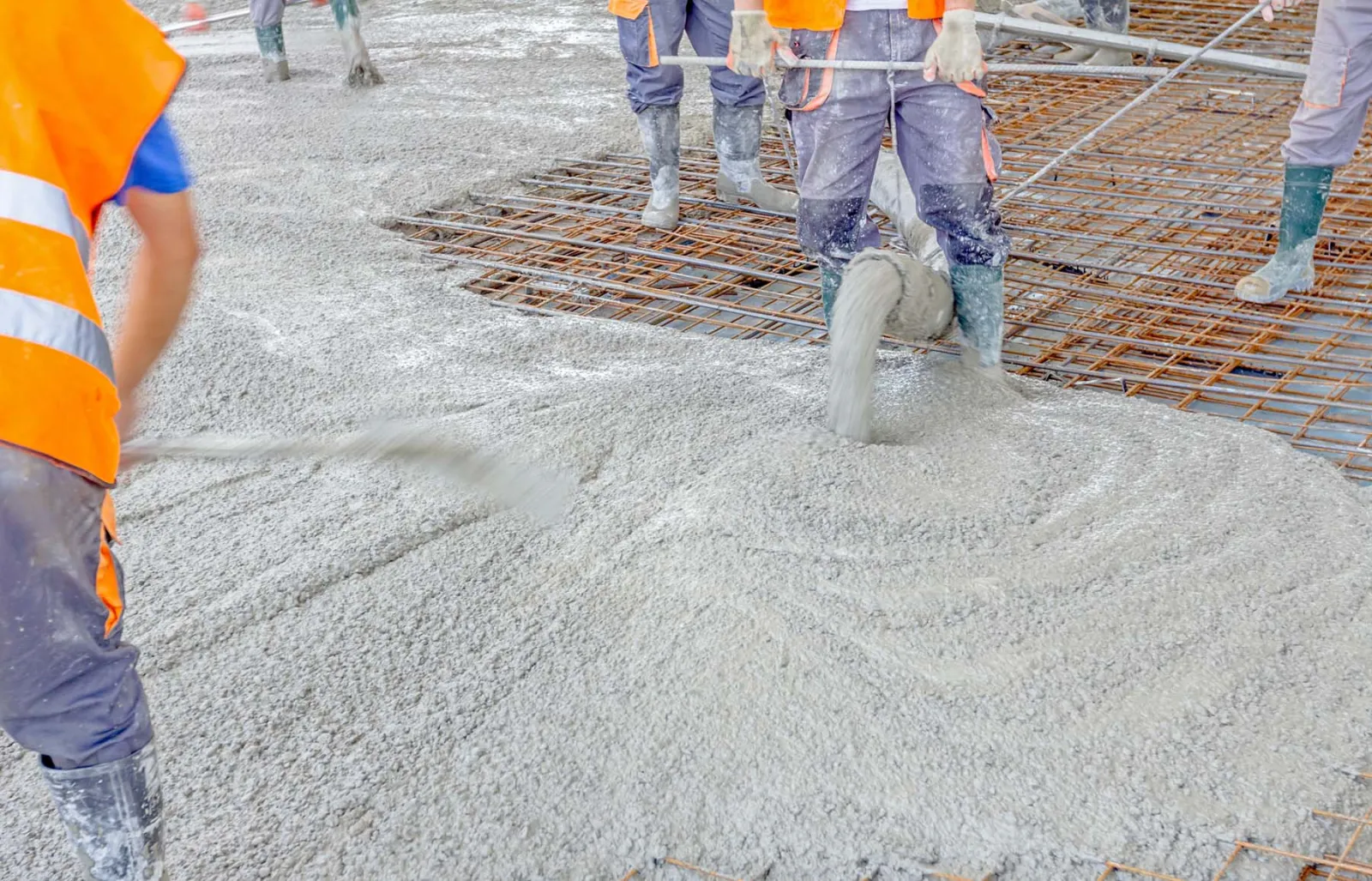
Concrete is strong under compression but weak in tension, so reinforcement carries the loads it cannot. We size rebar, usually #3 to #4 bar, or lay fiber and welded wire mesh to match what the slab will carry, whether that is foot traffic on a walkway or vehicles on a driveway. We set the bar on chairs, small stands that hold the steel in the center of the slab where it actually carries load, instead of letting it sit useless at the bottom of the pour.
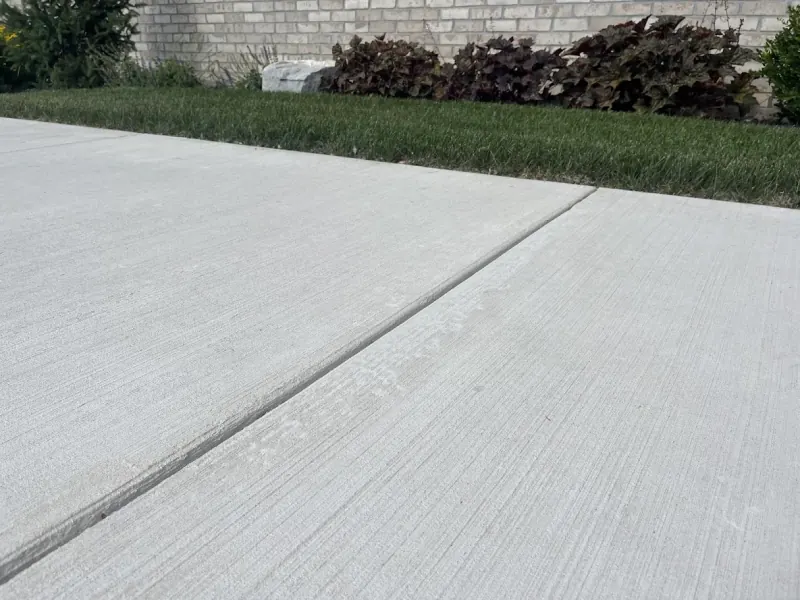
Concrete also shrinks as it cures, and that shrinkage will crack a slab somewhere. Our job is to decide where. We cut control joints with an early-entry saw at a spacing near 2.5 times the slab thickness in feet - shallow, planned grooves that tell the slab where to crack, so the cracks form down inside the joints instead of wandering across your new patio.
After finishing, we cure the slab with an ASTM C309 curing compound, a sprayed membrane that holds moisture in while the concrete gains strength, or a wet cure where the job calls for it. Concrete reaches most of its design strength at about 28 days, and a proper cure is what gets it there.
A rushed or skipped cure shows up in the finished surface. When the top of a slab dries faster than the concrete below it, it gains strength unevenly and can powder under foot traffic or develop a web of fine surface cracks. To prevent that, we match the cure to the weather. In cold conditions we cover the fresh slab with insulated blankets that trap the heat the concrete gives off as it hardens. On hot, dry days we shade the flatwork and keep it damp so the sun cannot pull the water out before the concrete is ready. Reinforcement, control joints, and curing all work together, and when we get all three right the slab carries its load, cracks only at the joints we cut, and reaches full strength with no weak layer at the surface.
Our Services
From driveways to fire pits, we handle every kind of concrete work a home or business needs, and we bring the crew and equipment each job calls for.
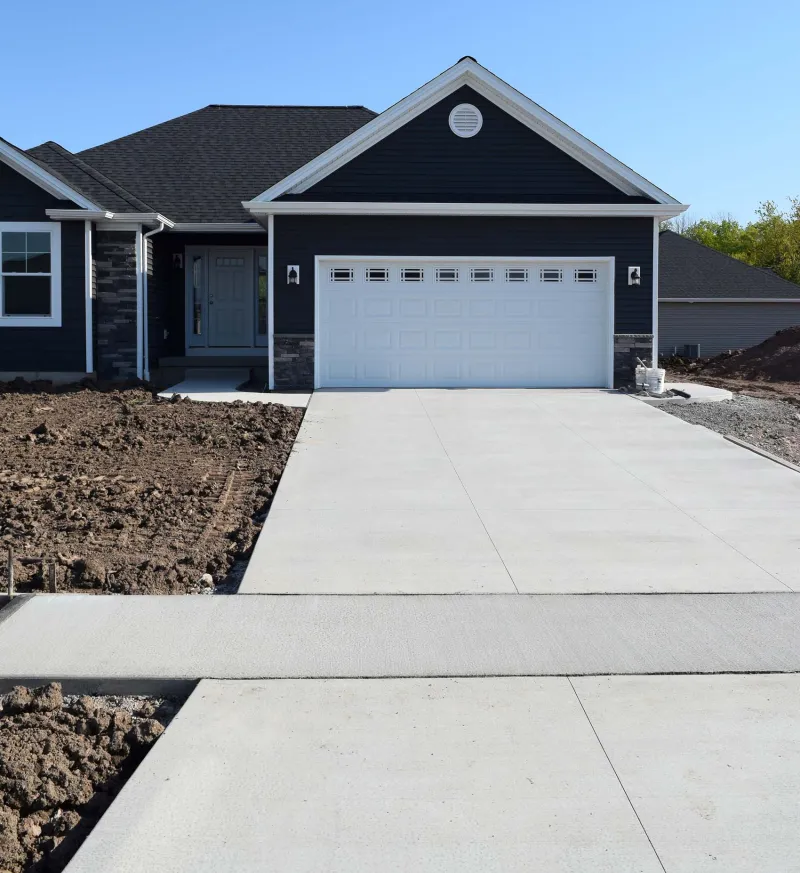
A driveway that holds up starts with the base, because the concrete only performs as well as the ground under it. We excavate to grade and compact a 4 to 6-inch gravel base so the slab cannot settle, then pour air-entrained concrete around 4,000 psi at 4 to 5 inches thick, and thicker where vehicles turn or stop. Wire mesh or rebar carries the load, and we cut control joints on time so any cracking stays hidden. You choose the surface: broom finish, stamped, or exposed aggregate. Most new driveways are ready to walk on in about a week and ready for parking at the 28-day mark.
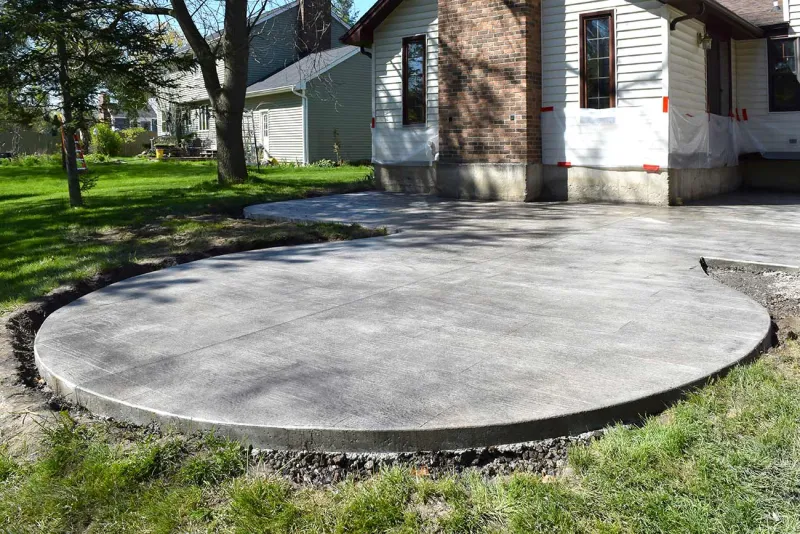
A patio is the slab you live on, so we build it to drain, wear, and look right for decades. We form and pour patios on a compacted gravel base, pitched about a quarter inch per foot away from the house. Wire mesh or fiber reinforcement holds the slab together, and we place an isolation joint where the patio meets the house so the two move independently. Control joints keep shrinkage cracks tucked out of sight. For the surface, choose broom, stamped, exposed aggregate, or integral color to match the house.
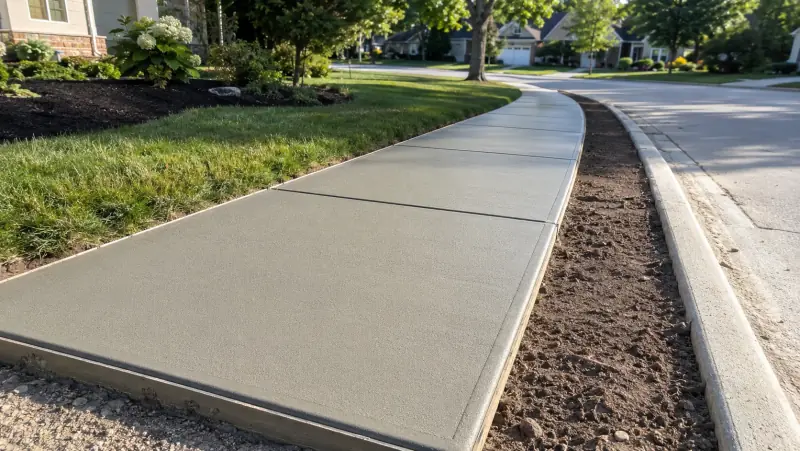
A good walkway is built to stay flat, shed water, and give you footing in bad weather. We pour 4-inch slabs over a compacted gravel base, formed to a code-compliant width and slope, including ADA-compliant grades where a public walk requires them. We tool control joints every few feet so the slab cracks where we plan, and each panel is pitched just enough to shed rain. The standard broom finish keeps shoes gripping when the walk is wet or icy, and we set walks flush to existing slabs with no lips or toe-catchers.
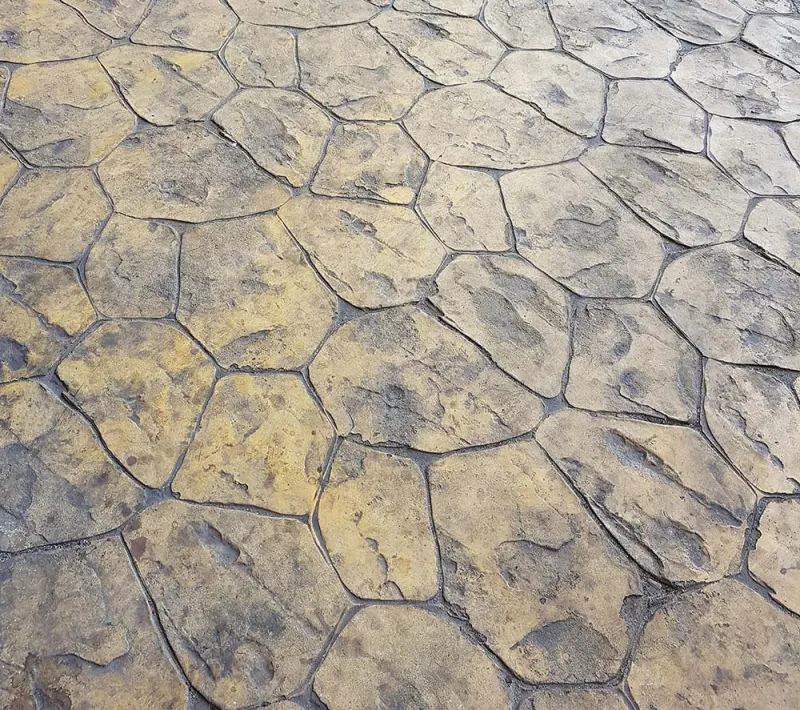
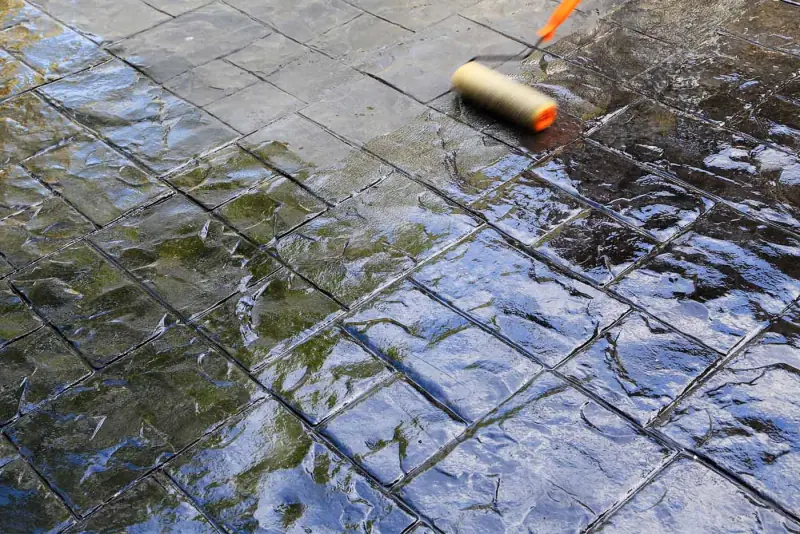
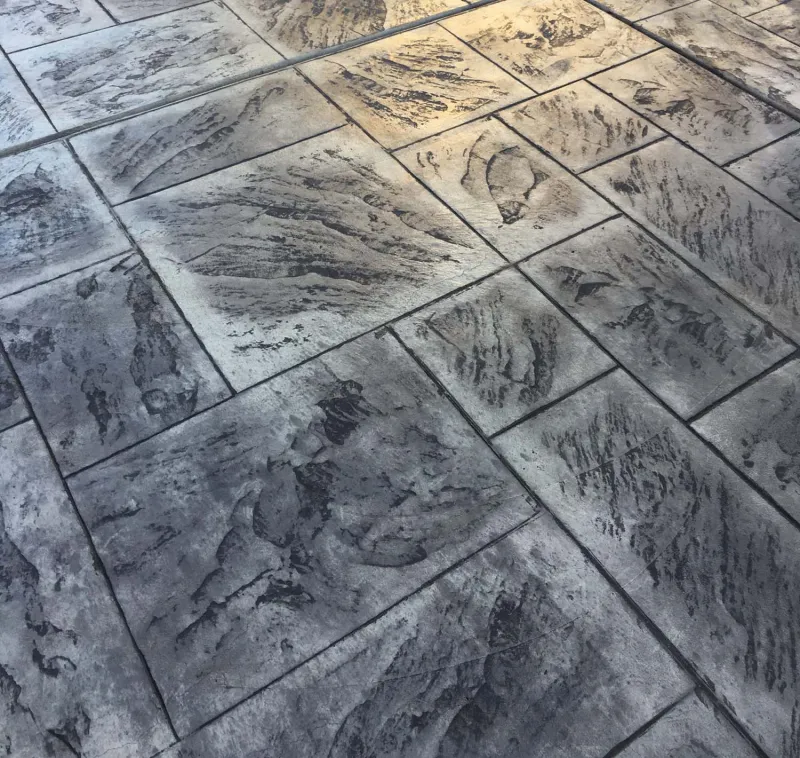
Stamped concrete gives you the look of stone, brick, or slate at a fraction of what the natural material costs. We press pattern mats into the fresh surface during the short window when the concrete will hold an imprint. A powdered release agent leaves a darker accent tone in the grout lines, so the pattern reads like real stone. Color comes from integral pigment or a broadcast color hardener. Unlike pavers, a stamped slab is one continuous piece - no joints for weeds and no stones to shift. Sealed and resealed every 2 to 3 years, it holds its pattern for decades.
Garages, pole barns, workshops, sheds, and equipment pads all sit on the same foundation of good practice: a slab poured to the thickness the load calls for, usually 4 inches for storage and 5 to 6 where vehicles or machinery will sit. We start with a compacted gravel base, and under any heated or enclosed space we lay a 10-mil vapor barrier that stops ground moisture from wicking up through the concrete. Rebar or welded wire mesh reinforces the pour, and we screed and float the surface level and true.
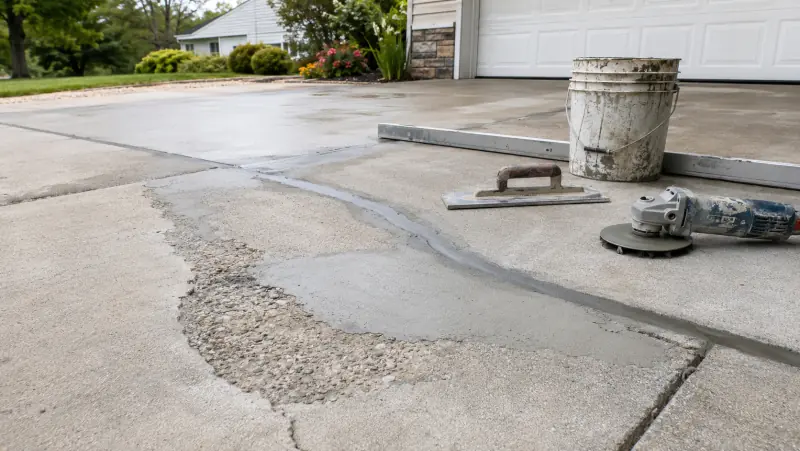
Most concrete that looks rough is still worth saving. When the base underneath is sound, repair costs a fraction of tear-out and replacement. We rout out cracks and fill them so water cannot get in and freeze the crack wider every winter. Spalled and pitted patches are cut back to solid concrete and rebuilt with a polymer-modified repair mortar that grips the old slab. We reseal failed joints and grind down raised trip hazards. The honest part is the diagnosis: we tell you when a surface can be repaired and when the base has failed.
Everything on your property sits on the foundation, so this is the work we spec the tightest. On new construction, we pour footings below the frost line, 32 to 36 inches here in Ohio, so frozen ground cannot heave them, then form and pour reinforced walls to code with damp-proofing and footing drains. On the repair side, we inject cracks with epoxy or polyurethane - epoxy welds a structural crack, polyurethane chases water through hairline cracks - and we fix the drainage cause, not just the symptom.
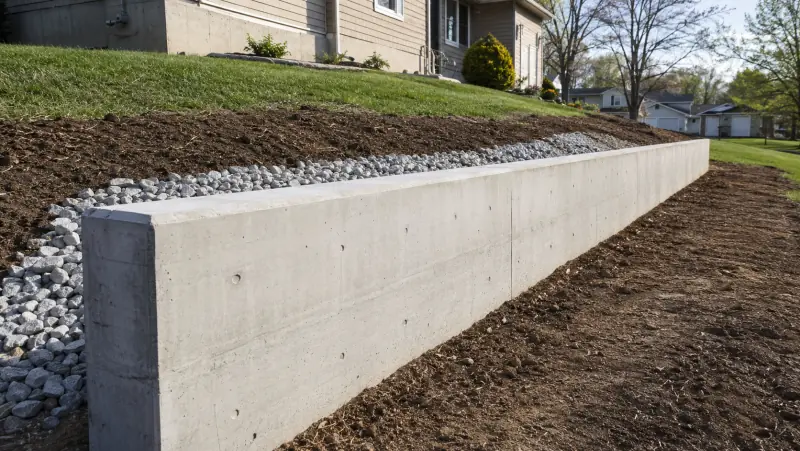
A retaining wall is a structure under constant load - the soil behind it never stops pushing, and wet soil pushes harder. Every wall sits on a footing poured below the frost line, and the wall is reinforced with vertical rebar tied into that footing so the two act as one piece. Behind the wall, we backfill with clean drainage gravel and set weep holes to let water escape, because trapped hydrostatic pressure topples more walls than the soil ever does. Taller walls get a batter, a slight backward lean into the slope.
A slab that is ugly on top but solid underneath does not need to come out - it needs a new wearing surface. We clean the old slab, grind or etch it to open the pores, and repair cracks so they do not telegraph through, then apply a polymer-modified overlay that fuses to the old concrete instead of sitting on it like paint. The overlay runs from a skim-coat micro-topping to a half-inch rebuild, finished plain, broomed, or stamped and colored. The honest limit: an overlay fixes a surface, not a failed base.
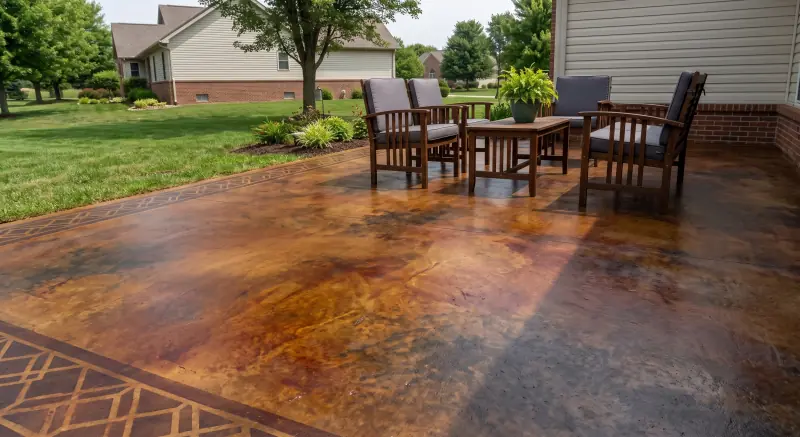
Concrete staining turns a plain gray slab into a finished floor or patio without adding a layer that can chip or peel. Acid stains react chemically with the minerals in the slab for translucent, mottled color that is permanent because it becomes part of the concrete. Water-based stains open up the palette and can be layered or stenciled. Because stain is translucent, prep decides the result, so we clean, profile, and test a sample area first. We seal exterior work to lock in the color; interior floors get a sealer with a maintainable wax coat.
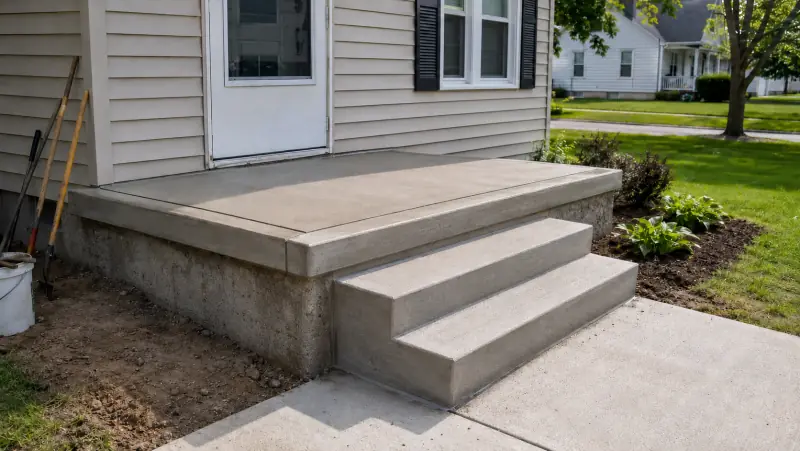
Everyone has seen a porch doing the slow lean, with a stoop that settled away from the house. That happens when a porch is poured as a loose slab beside the foundation, so we build ours the opposite way - doweled into the foundation with steel pins drilled and epoxied into the wall, so the porch and house move as one. Steps are formed and poured reinforced with uniform riser heights to code, and we slope the landing away from the entry. The finish can be broom, stamped, or colored to match your walkway or driveway.
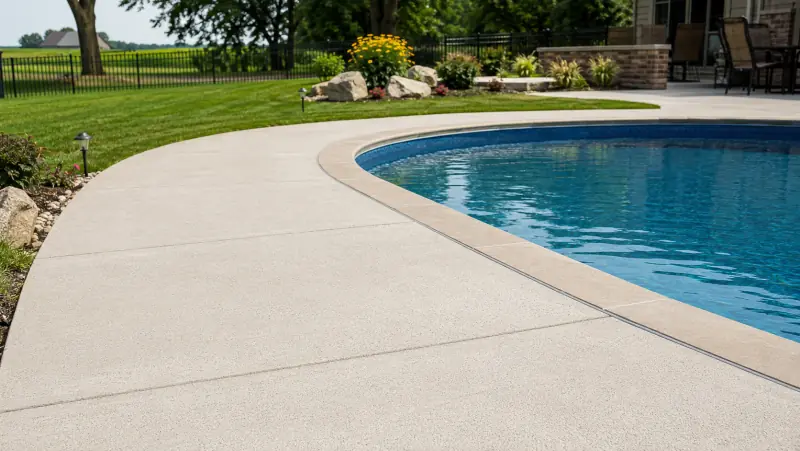
A pool deck lives a harder life than any other slab in the yard - barefoot traffic, standing water, summer sun, and a steady dose of chlorine or salt. The deck is pitched away from the pool so splash water drains to the yard, and we set an expansion joint sealed with flexible sealant between the deck and the coping. A broom or textured finish keeps wet feet gripping, and lighter colors reflect heat; a cool-deck coating stays comfortable in July sun. Everything gets sealed with a salt-tolerant, chemical-resistant sealer.
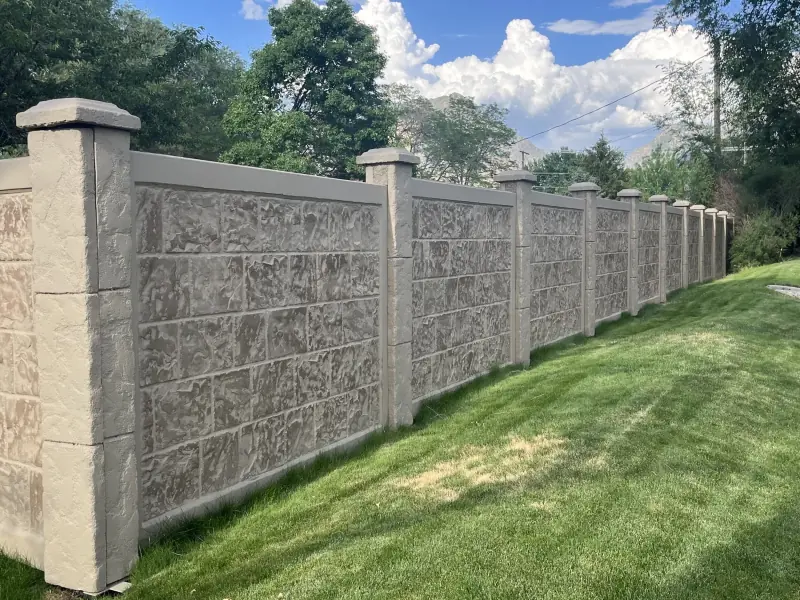
A precast concrete fence is the last fence most properties ever need - it will not rot, warp, blow down, or ask to be repainted. We auger post holes below the frost line and set precast posts in poured footings, then drop the concrete panels into the slotted posts so the fence goes up section by section. The panels are cast to read as stacked stone, board fence, or brick, so from the street it passes for masonry at well below a masonry price. A solid panel also blocks noise, and a damaged section lifts out and a new one drops in.
Concrete sealing is the cheapest insurance a slab can have. A few cents per square foot, on the right schedule, keeps a driveway from pitting and going gray a decade early. Here is the test: pour water on your concrete - if it soaks in and darkens instead of beading, the sealer is gone. We clean the surface and apply a penetrating silane or siloxane sealer that repels water and road-salt chloride from inside the slab, or a film-forming acrylic for a wet look. Exterior surfaces need a fresh coat about every 2 to 3 years, ideally in the fall.
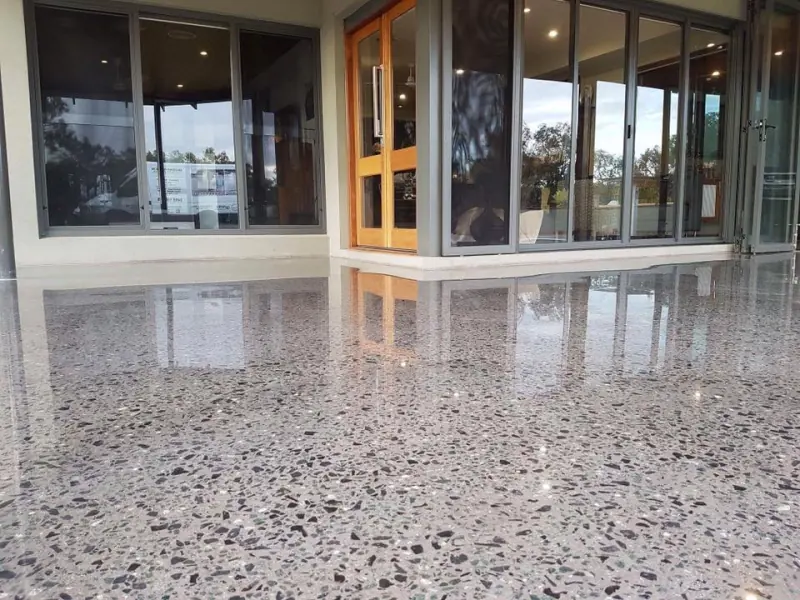
Polished concrete is not a coating - it is the slab itself, ground and refined until it shines, so there is nothing to peel, yellow, or wear through. We grind with progressively finer diamond abrasives and harden the surface with a lithium silicate densifier. Two choices define the look: exposure, from a smooth gray cream finish to a full aggregate grind, and sheen, from soft matte to mirror gloss. Day to day the floor asks almost nothing - dust-mop, damp-mop, no wax. It is why polished floors run warehouses, showrooms, restaurants, and finished basements.
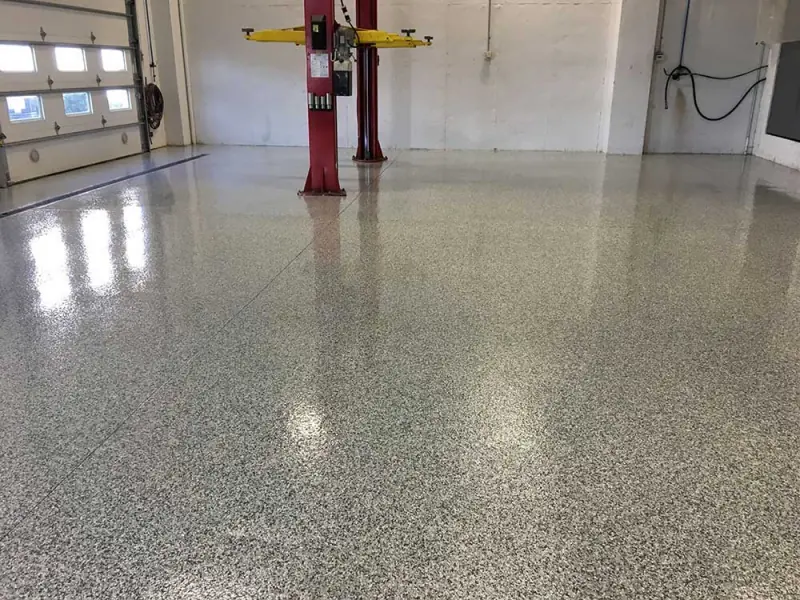
Most garage floor coatings do not fail as coatings - they fail as prep jobs. The DIY kit peeling up in sheets went down on a slab that was never prepared, so that is where we start: we grind the surface with diamond tooling to open the pores and check the slab for moisture. Then we lay down epoxy or a polyaspartic system that cures fast enough to put your cars back the next morning and will not yellow in sunlight. Color chips are broadcast in for grip and looks, locked under a clear chemical-resistant topcoat that shrugs off oil, salt, and hot tire pickup.
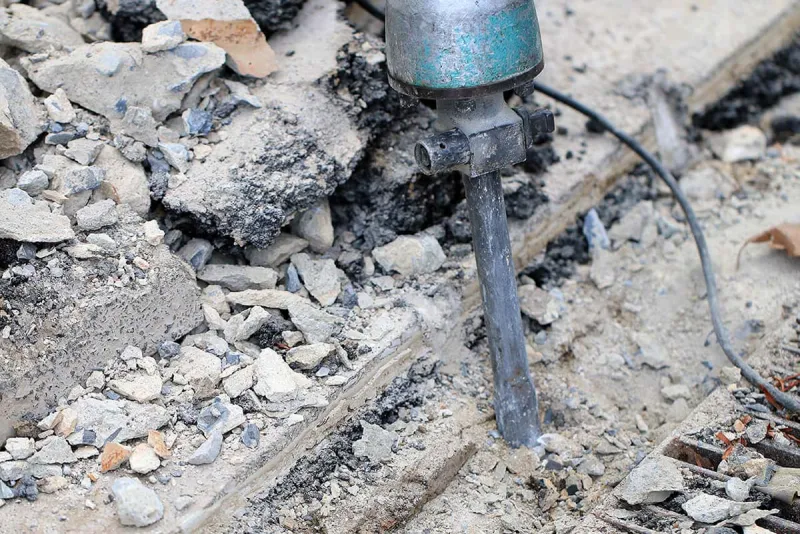
Before most new concrete pours, there is an old slab in the way, and how it comes out affects how the new one holds up. We break up driveways, patios, sidewalks, steps, and foundations with the tool the job calls for - a breaker on a skid steer for big flatwork, jackhammers in tight spots, saw-cutting first when only a section comes out. Everything is hauled to a recycler. Then comes the part that decides the next thirty years: we regrade and compact the subgrade so the new pour starts on ground that will not settle.
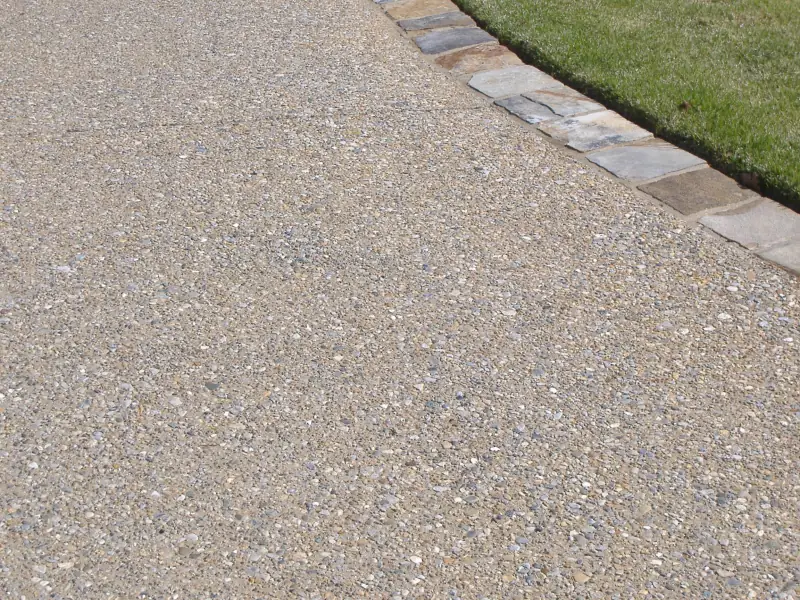
Exposed aggregate is the decorative finish that earns its keep - the texture you see is real stone, so it grips underfoot when wet, hides dirt and tire marks, and cannot wear off. The aggregate can be batched into the mix, or for full control we seed a chosen decorative stone across the fresh surface, from warm pea gravel to salt-and-pepper granite. We spray a surface retarder that holds the top paste soft, then wash it away at the right hour to reveal the stone at a uniform depth - the timing of that wash is the craft. Sealing locks the aggregate in and wets out the color.
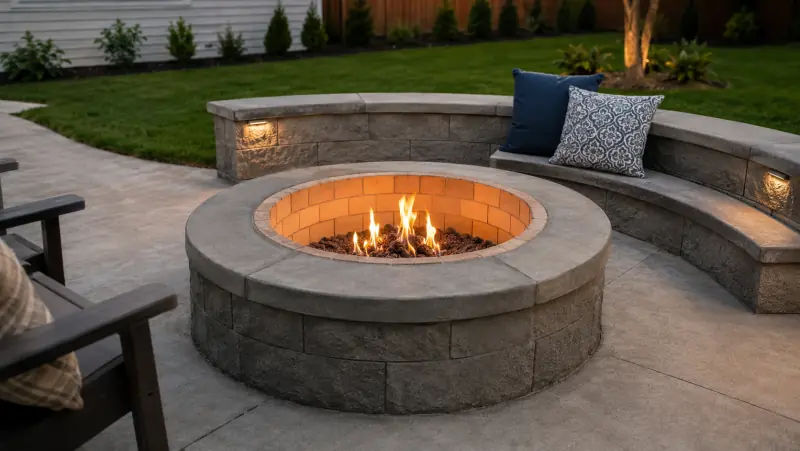
Ordinary concrete exposed to repeated high heat will spall, so we never let flame touch the structural shell. We build cast and block fire pits with a refractory lining - fire brick or refractory mortar rated for direct flame - that takes the heat while the concrete around it stays cool. The pit floor gets drainage so rainwater runs out. We build for either fuel, wood-burning or a gas burner set in the ring, and can add integrated seat walls at sitting height. The whole piece can be stamped, stained, or faced to match the patio or pool deck it sits in.
The same slab can be finished a dozen ways. Stamped concrete is one of the most popular. We press large texture mats into the surface while the concrete is still plastic, which is the trade term for that short window when the pour is firm enough to hold a pattern but still soft enough to take one. Stamp too early and the pattern smears. Stamp too late and it will not print at all. Before the mats go down, we dust the surface with a powdered release agent. The release agent does two jobs. It keeps the mats from sticking to the wet concrete, and it leaves a darker second tone down in the grout lines of the pattern. That second tone is why good stamped concrete looks like real stone, because real stone is never all one color.
The base color goes in one of two ways. An integral pigment is mixed into the concrete at the plant, so the color runs all the way through the slab and can never wear off. A color hardener is the other option. We broadcast it across the fresh surface as a dry powder and float it in, and it does double duty: it colors the top layer and packs it denser at the same time, so the finished surface is more wear-resistant than the concrete underneath it.
Staining works on concrete that has already cured. Acid stains react chemically with the lime in the slab, so the color is permanent and mottled like natural stone and cannot peel, while water-based stains give a wider, more uniform palette. For exposed aggregate, we spray a surface retarder on the fresh pour that holds the top paste soft overnight, then wash it off to reveal the stone beneath. A broom finish drags fine ridges across the surface for grip underfoot, and polished floors are ground with progressively finer diamond abrasives, then hardened with a lithium silicate densifier that reacts inside the concrete and tightens the surface until it shines without a coating.
A finish only lasts if the surface is protected. Road salt carries chloride that works into unsealed concrete and pits it, and plain water uptake does the same damage over time. We seal exterior surfaces with penetrating silane or siloxane sealers, which soak into the pores and repel water from inside the slab while still letting the concrete breathe, or with film-forming acrylics where you want a light sheen or a wet look. On sealed pool decks and steps we can broadcast a fine grip additive into the sealer so the surface stays slip-resistant. Most exterior concrete should be resealed about every 2 to 3 years to keep that protection in place, and we tell you the interval for your finish before we leave the job.
From the first phone call to the final walkthrough, here is what working with us looks like.
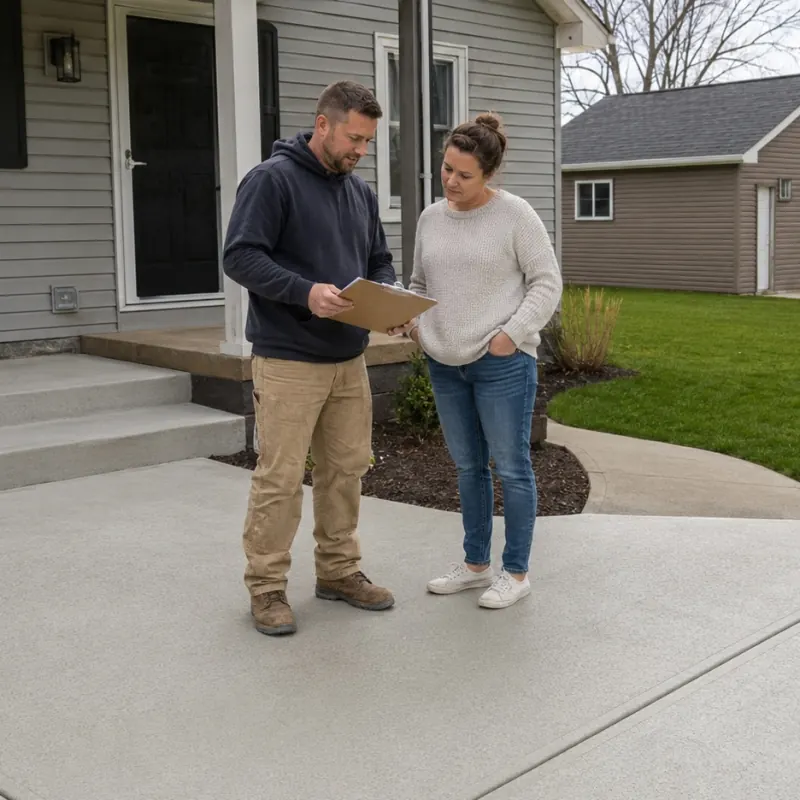
We come out, measure the area, and talk through layout, finish options, and access. You get a written scope and price - square footage, thickness, mix, reinforcement, and finish on paper - with no phone-quote surprises.
We set a pour date around the weather window, and if rain or a hard freeze threatens the pour, we move it rather than gamble your slab on a bad forecast.
Everything described above: base compaction, forming, the slump check at the chute, and your chosen finish, timed right. You do not need to be home for it, but you are welcome to watch.
We cut the joints on time, cure the slab, and apply sealer where the scope calls for it. We tell you exactly when you can walk on it and when you can park on it.
We walk the finished work with you, answer questions, and leave you a care sheet - the reseal interval and the first-winter do's and don'ts - before we call the job done.
Ready to get your project on the schedule?
Call for a free on-site estimate today.
Call Now: (419) 701-5321
You can judge a concrete contractor on things you can actually check: the paperwork, the process, and whether they will tell you no. Tiffin Concrete Co. has spent over 15 years pouring and repairing concrete across Seneca County, and here is what that gets you.
That is a lot to keep straight, so we put it in writing before we start. Call (419) 701-5321 or use our quote form for a free estimate on your project.
Concrete Service Areas Around Tiffin
Tiffin sits along the Sandusky River as the seat of Seneca County, a college town home to Heidelberg University and Tiffin University, with the restored Ritz Theatre and the Tiffin-Seneca Public Library downtown. We pour and repair concrete for the homes and businesses around all of it.
Weather here is hard on concrete. North Central Ohio gets a real winter: regular snow, plenty of rain, and dozens of days each season where the temperature crosses freezing in both directions. Every one of those swings pushes meltwater into an unprotected surface and refreezes it there, and that cycle is what scales and pits a concrete slab that was not poured for it. It is why we use air-entrained mixes and seal exterior surfaces against the chloride in road salt: build concrete for this weather and it holds up for decades. Pour it like you would in Tennessee and it comes apart in a few winters.
Beyond Tiffin, we pour and repair concrete across the surrounding towns listed here.
Project Cost
Concrete pricing comes down to a handful of factors: the square footage, how thick the slab needs to be, the reinforcement it takes, the finish you choose, whether an old slab has to come out first, and how easily a concrete truck can reach the area. Locally, plain broom-finished flatwork typically runs in the range of $5 to $10 per square foot installed, so a standard two-car driveway usually lands somewhere between $3,500 and $7,000 before any decorative work.
From that base, the additions are predictable. Stamped, stained, and exposed-aggregate finishes add to the square-foot price because they take more material and skilled labor. Tear-out of an existing slab is its own line item, thicker slabs and heavier rebar move the number up, and a tight site adds labor. What we will not do is quote your project from this page or over the phone - every real number starts with an on-site measurement and ends as a written scope, so the price you approve is the price you pay.
Reviews
Plain broom-finished flatwork typically runs $5 to $10 per square foot installed in our area, so a standard two-car driveway usually lands between $3,500 and $7,000. Decorative finishes, tear-out of an old slab, and thicker pours for truck traffic add to that. Every firm number starts with a free on-site measurement and a written scope.
Yes. We pour driveways, patios, porches, and garage slabs for homeowners, and foundations, loading pads, sidewalks, and larger flatwork for businesses across Tiffin and Seneca County - same crews, same specs, same written scope.
Yes, if it is poured for them. We use air-entrained concrete rated around 4,000 psi, whose microscopic air pockets give freezing water room to expand, and we seal exterior surfaces against road-salt chloride. Freeze-thaw cycling destroys concrete that was not built for it; it is the first thing we design for.
Foot traffic is usually fine after about 7 days. Wait roughly 28 days before parking vehicles on a new driveway - that is when concrete reaches most of its design strength, and driving on it early causes cracks that no one can fix later. We give you the exact timeline for your pour at the final walkthrough.
Within limits, yes. Our prime season runs roughly April through November, but with heated mix water, non-chloride accelerators, and insulated curing blankets, we can pour on cold days - we just will not pour on frozen ground or into a forecast that would freeze the slab before it gains strength. If a job should wait for spring, we say so.
Often, yes. Crack routing and filling, spall patching, joint resealing, and resurfacing overlays restore sound concrete for a fraction of tear-out cost. The deciding factor is the base: if the ground under the slab is still solid, repair is usually worth it, and we tell you honestly when it is not.
Those are control joints, and they are there on purpose. Concrete shrinks as it cures and will crack somewhere - the joints are shallow, planned grooves that decide where, so the cracks form down inside the joints instead of wandering across the surface. A slab with no joints is not stronger; it just cracks wherever it wants.
Reseal exterior concrete about every 2 to 3 years with a penetrating silane or siloxane sealer, ideally in the fall so protection is at full strength before the first road salt. Quick check: pour water on your slab - if it soaks in and darkens instead of beading, it is time.
Yes. Tiffin Concrete Co. is licensed, bonded, and insured with general liability coverage, our work meets local building codes and ACI standards, and we will hand over the certificates if you ask - you should ask every contractor.
Yes. Every quote starts with an on-site measurement and ends as a written scope covering square footage, thickness, mix, reinforcement, and finish - the price you approve is the price you pay.
Ready to price your project? Call Tiffin Concrete Co. or request a quote through our form, and tell us what you are thinking about - a driveway, a patio, a repair, or something you are not sure has a name yet.
We will set up a time to come out, measure the area, and talk through your options on site. Every estimate ends as a written scope, so you know the square footage, thickness, mix, reinforcement, and finish before anything is poured, and the estimate costs you nothing whether or not we do the work. Licensed, bonded, and insured, we handle concrete for homes and businesses across Tiffin, Seneca County, and the surrounding North Central Ohio towns.